
Your complete guide to identifying, preventing, and eliminating flying termites in Singapore homes
Flying Termites in Singapore 1
Strange how quickly a peaceful evening in a Singapore flat can turn into a bug-fuelled frenzy. My unexpected plunge into pest control began after a flying termite swarm chased my family out of our living room—and let’s just say, a decade later, I’ve seen it all. The panic, the worry about your furniture and walls, and the questions. That’s exactly why I started StopPest—to bring clear answers, honest advice, and proper solutions to the moment chaos flaps through your windows.
This guide dives straight into the nitty gritty of flying termites in Singapore. It’s local, it’s packed with first-hand stories, and (promise) it skips the jargon. Whether you’ve already spotted a swarm or just want to be prepared, you’ll learn how to spot what’s really invading your home—and what to do next, with none of the frustration or mystery. Let’s get your peace of mind back, step by step.
Termite Identification: How to Recognise Flying Termites in Singapore
Flying termites—also known as alates
—are probably the most panic-inducing sight in a Singapore home. They’ll suddenly appear after rain, all wings and wobbly flight, gathering around your lights. But spotting one doesn’t have to mean doom if you know what you’re looking at. Most common in Singapore are subterranean and drywood termite swarms, which both have some tell-tale features.
First up: wings. Unlike ants or other bugs, these termites have two pairs of wings that are exactly the same length, long and transparent or smoky-brown. You’ll notice the wings stretch well past the length of their bodies, sometimes with a gentle vein pattern—think delicate, paper-thin but surprisingly persistent. You might find them scattered on your window sills the next morning.
Now, check the body. Termites aren’t pinched
like ants. Their bodies are thick and solid, almost like a grain of rice with legs. You won’t see a tiny waist in the middle. Their antennae are straight or gently curved (never bent at a sharp angle), distinguishing them in close-up photos. This is important because confused inspections often come down to these small details—a torchlight and a hand lens can be a homeowner’s best tool.
One local mystery I’ll never forget: a family called me to investigate after seeing a swarm. They thought they had moths, but those even-winged, thick-waisted insects turned out to be termite alates getting ready to set up shop. It’s the small details—wing shape, body sections, even how they gather at light—that make all the difference for termite identification in Singapore’s particular climate.
Termite vs Ants: Spotting the Difference When Winged Insects Invade
The moment a cloud of flying insects erupts in your home, the only thing scarier than seeing them is not knowing what they are. In Singapore, winged swarmers could be ants or termites—and trust me, mixing the two up leads to either unnecessary panic or a very expensive mistake.
The first trick: look at the wings. Termite alates have four wings of equal size, all stretching clearly beyond the body. Flying ants (including carpenter ants) have two big front wings and two noticeably smaller hind wings. If your phone’s on hand, snap a photo with the bug’s wings spread out—difference jumps out.
Now, the silhouette. Termites look like straight little sausages—no hourglass
in the middle. Ants, especially flying ones, have a pinched narrow waist in the middle, separating head, thorax, and abdomen. This is very obvious under a torchlight or with a phone camera zoom.
And the antennae: termite antennae are straight, maybe with a slight curve, never elbowed.
In contrast, ant antennae bend sharply (sometimes almost a 90-degree angle). If you’re squinting at a bug around your ceiling light, try snapping another photo—bent = ant, straight = termite. Over the years, countless clients worried about ant swarms
later discovered it was termites threatening their woodwork. For real ant pest worries, you might want to check out trusted local services like StopPest’s expert ant removal—but never mistake one for the other. Your property’s safety depends on the right call.
Why Do Flying Termites Appear in Singapore Homes?
Every Singaporean has a story about a night when strange fluttering insects appeared en masse, right after a heavy rain or during humid weather. Flying termites love our climate—they’re practically built for it. But there’s more to their appearance than just bad luck.
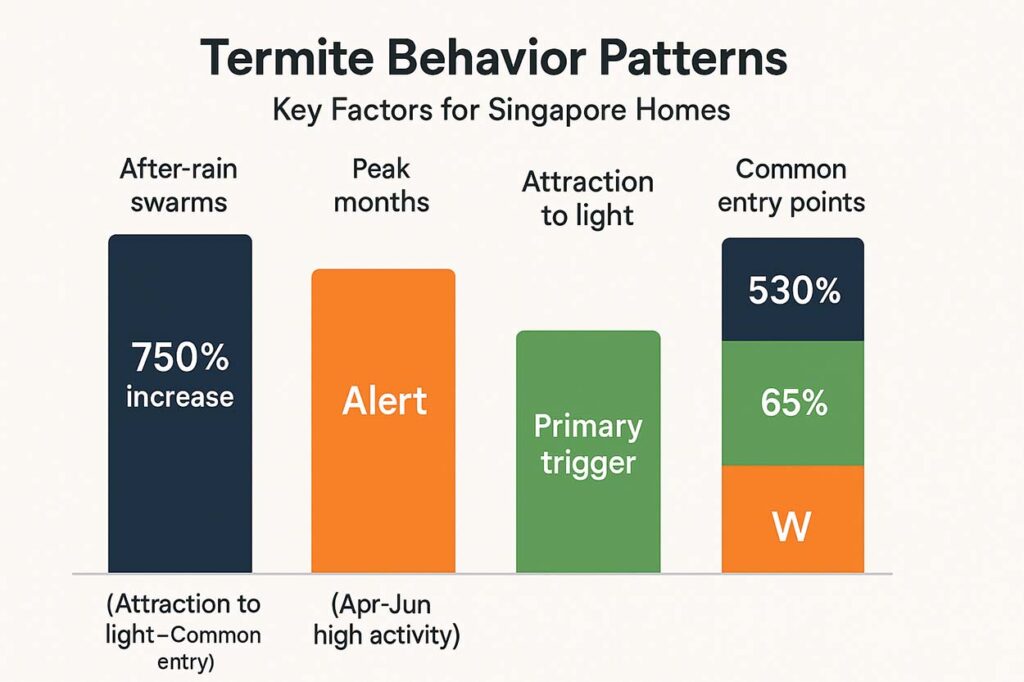
Key factors that trigger flying termite swarms in Singapore homes
Singapore’s unique mix of concrete flats and hidden wood, leaking pipes, and perpetual humidity creates a perfect environment for termite swarms. Swarming isn’t random; it’s nature’s way of spreading the termite colony to new frontiers. Yet not all homes see the same action—some structural factors and lifestyle habits make a big difference.
Based on hundreds of site visits across HDBs and condos, flying termites usually appear when a home has just the right balance of moisture, nearby wood, and access points that make it a termite magnet. A swarm marks the moment a hidden colony is sending out
future kings and queens to find a new nest—often after heavy rain or when humidity peaks. These are the main causes, and why they matter is covered in detail just below.
Termite Causes: What Attracts Flying Termites Indoors
- Hidden Moisture Sources: Leaky pipes, condensation on aircon units, and damp under-sink cabinets provide the perfect humid micro-climate for termites. Even
silent
drips behind walls can lure them inside. - Wooden Fixtures and Furniture: Untreated wooden window frames, kitchen cabinets, or furniture against external walls act like a buffet for hungry swarmers, especially when slightly soft or water-damaged.
- Proximity to Untreated Colonies: Living near an untreated or old infestation—especially from neighbours—raises the odds of swarmers targeting your flat during flight season.
- Rotting or Decaying Wood: Old skirting boards, forgotten cardboard boxes, or stored wood attract termites and give them easy access inside.
Termite Behaviour: When and Why Swarms Take Flight
- Post-Rain Humidity Triggers: Termites are most likely to swarm on evenings after heavy rainfall, when the air is thick with moisture—a perfect launchpad for alates seeking to mate and settle.
- Seasonal Peaks: While Singapore is humid all year, termite flight peaks during wetter months (often April–October) and right at the start of thunderstorms.
- Mating and Colony Formation: Both male and female swarmers (future kings and queens) emerge together, pair off mid-flight, then drop to the ground to shed wings and seek a nesting spot.
- Light Attraction Indoors: Indoor lights and open windows at night act as powerful magnets for swarming termites, especially around 7–10pm after rain.
Termite Signs: What an Infestation Looks Like in Your Home
The early warning signs of termites are subtle, but they’re usually there long before you notice real damage. In Singapore, the most common clues are muddy tubes climbing your walls or skirting, pepper-like droppings under wooden furniture, or sudden piles of wings by the window after a humid night.

DIY inspection: checking skirting boards for mud tubes and termite activity after rain
Many homeowners miss these at first, thinking hollow-sounding wood is just old furniture
or that a bit of dust under the cabinet is nothing much. Sometimes, it’s only when doors stop closing properly, or when the vacuum pokes right through the skirting board, that folks call in expert help.
From experience, seeing these signs early can save you thousands in repairs. Mud tunnels, strange patterns on painted wood, windows suddenly sticking—these little clues spell big trouble if ignored. In the next section, you’ll find the practical inspection tricks anyone in Singapore can use to catch termites before they conquer your home.
Early Detection: Termite Inspection Tips for Singapore Homes
- Tap for Hollowness: Gently knock on wooden doors and skirting boards. A hollow or papery sound often means termites have emptied the inside.
- Spot Mud Tubes: Shine a torch under cabinets or along the wall edges. Look for thin, muddy tunnels—these are busy termite highways.
- Inspect for Wings: Find tiny, clear wings near windows, especially after rainy evenings? Swarmers have likely settled nearby and shed them as a sign of colony start.
- Check Damp, Dark Corners: Termites love dampness. Look beneath sinks, behind stored items, or in any corner where condensation builds.
- Call the Pros Early: DIY checks are handy, but fast-growing infestations need expert attention. An NEA-certified termite inspection is the quickest way to get peace of mind and avoid major repairs.

Expert inspection: technician documenting discarded termite wings on windowsill
Termite Colony Formation: The Secret Life of Swarmers
That cloud of flying insects is more than just a panicked moment—it’s the start of something far more damaging. In Singapore, once termite alates (swarmers) land inside a humid home or hidden wall, they waste no time turning romance into real trouble.
The swarming termites pair up—one male, one female—then search for the perfect hidden spot inside skirting, under flooring, or even inside solid furniture. As soon as they’ve found it, they both shed their wings, sealing themselves inside to mate and establish a brand new colony.
This is how new termite infestations start, hidden and often completely silent for months. It’s especially risky in Singapore’s stacked apartments and terraces, where one untreated colonisation can quietly jump from flat to flat. Understanding this cycle is key to stopping termite problems before they become disasters. The next section reveals how a forgotten pile of wings means it may already have happened.
Termite Wings: Why Discarded Wings Signal Hidden Infestations

Critical warning sign: discarded wings indicate termites have already paired and nested
If you stumble on a small heap of fragile, translucent wings by your window or couch, don’t just vacuum and forget it. Those wings are a warning: termite swarmers have landed, paired up, and may have sealed themselves away to build a new nest inside your home.
In several Singapore flats I’ve worked in, timely action on wings alone saved owners from needing full renovations. The wings tell you that the mating, settling, and shedding process already happened—so it’s time to get serious and investigate before the young colony gets comfy and hungry.
Termite Damage in Singapore: Real Risks for Property and Furniture
- Weakened Wooden Doors and Frames: Termites hollow out interior wood, leaving doors soft, difficult to close, or even detached from hinges. Many Singapore tenants face expensive replacements after infestations.
- Deteriorating Kitchen Cabinets: Cupboards, drawers, and under-sink panels made of wood or plywood become powdery or warped as termites silently eat their way through from the inside out.
- Structural Damage to Beams and Skirting: Behind the scenes, termites can devour support beams and skirting boards, jeopardising the structural integrity of your flat and causing safety concerns.
- Collapsed Floors and Ceilings: In severe, long-overlooked infestations, termites can hollow out entire sections, leading to warped or collapsing flooring and dangerous sagging ceilings.
- Lost Property Value: Evidence of current or past termite activity (like scars, droppings, or
soft boards
) leads buyers to negotiate lower prices or walk away entirely, hitting your home’s resale value hard.
Simple Termite Prevention Steps Every Singapore Home Should Take
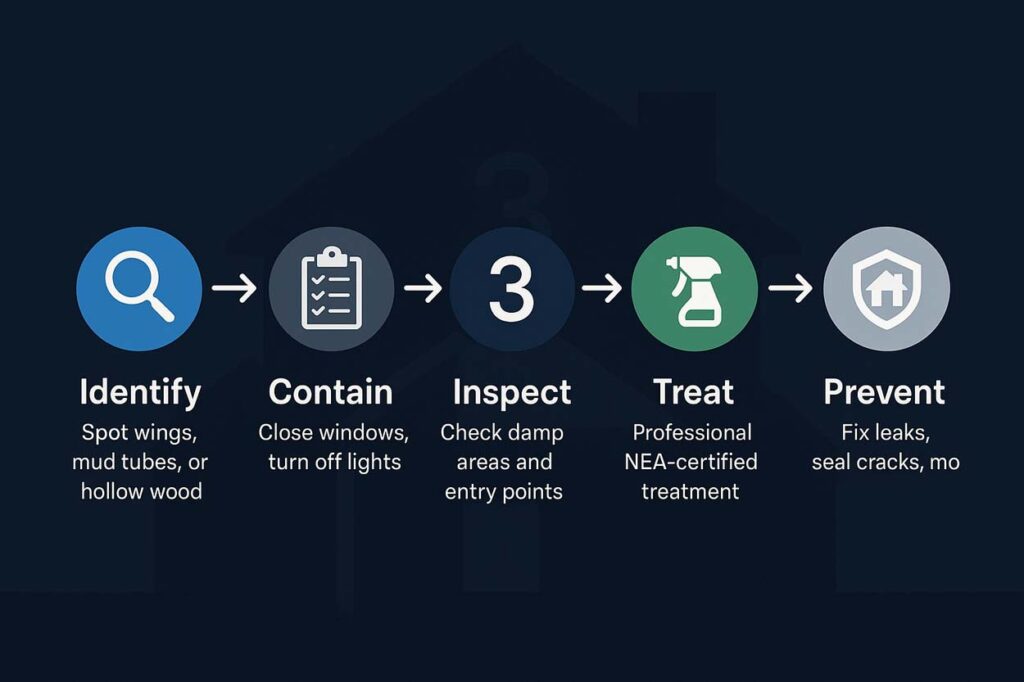
Your action plan: Identify → Contain → Inspect → Treat → Prevent
- Cut Down Wood and Cardboard Storage: Don’t let old boxes, newspapers, or unused furniture pile up. These serve as ready-to-eat termite food and hiding places.
- Eliminate Damp Spots: Fix leaks under sinks, aircon drains, and water heaters promptly. Use a dehumidifier or fan for steamy corners and behind furniture.
- Seal Entry Points: Inspect window frames, door bases, and wall cracks. Use weatherproof sealant to block termite
highways
connecting outdoors to wood inside. - Elevate Furniture from Floors: Place wooden sofas, cabinets, and bed frames off direct floor contact using rubber pads or non-wood feet. This makes termites’ journey much harder.
- Request Regular Pro Inspections: Singapore’s humidity makes yearly termite checks a smart investment—eco-friendly, founder-tested, and reliable peace of mind for any property.
When You Need Termite Control: DIY or Professionals?
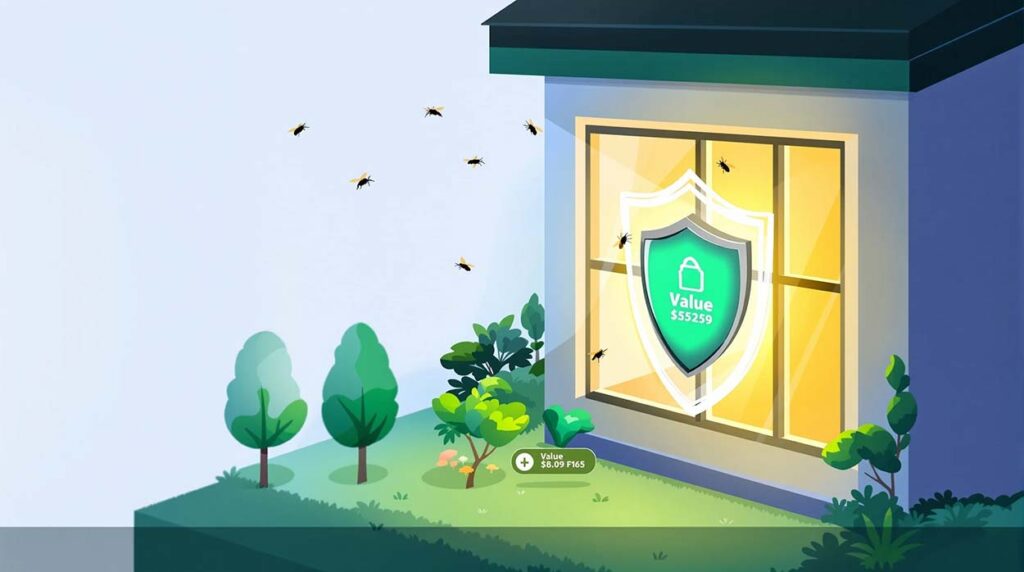
Professional termite protection: cost-effective shield for your Singapore home
The minute you discover termite wings, muddy tubes, or hollow-sounding wood, it’s tempting to rush for sprays or set out homemade traps. DIY options like barrier sprays or hardware-store baits might solve very small, early-stage problems, but in Singapore’s climate, colonies grow so fast that most do-it-yourself measures act as only temporary band-aids.
That said, if you spot swarmers but no mud tubes or damage, a quick response—removing moisture, sealing cracks, and setting non-toxic baits—could buy time. Still, it’s critical to remember: termites hide deep inside walls and wood, and even the best home products can’t reach the queen.
Massive swarms, recurring wings, or visible wood damage mean it’s time to call in the pros. A seasoned team, like those at StopPest, will inspect, identify the exact termite species, and create a targeted treatment plan using NEA-approved, eco-friendly baits and monitoring. Booking a free inspection or same-day serviceensures the problem is solved at its source. For most termites, only a specialist can guarantee your property’s long-term safety and value.
Termite Removal Tips: How to Get Rid of Flying Termites Fast
- Switch Off Lights and Close Windows: Alates are drawn to light. Minimise attraction by turning off unnecessary lights and closing windows and doors during a swarm.
- Vacuum or Trap Swarmers: Use a vacuum cleaner to quickly remove flying termites from the home. Dispose of the vacuum bag immediately outside to prevent hidden survivors.
- Block Entry Points: Seal window sills, door gaps, and any visible cracks with tape or cloth until professionals can assess and properly fix them.
- Clean Up Wings and Droppings: Regularly sweep or vacuum fragile wings and droppings. Leaving them behind signals ongoing termite activity or possible nests.
- Don’t Rely on Sprays Alone: Most sprays only kill visible termites, leaving the colony intact. DIY chemical treatments might scatter the swarm but rarely stop future issues.
- Call a Specialist Immediately: After a swarm, professional assessment is vital. Quick action stops new queens from establishing hidden colonies and prevents real structural damage.
Long-Term Termite Infestation Management in Singapore
- Schedule Ongoing Inspections: Arrange professional checks once or twice yearly, especially after rainy seasons, to catch silent colonies before they explode.
- Install Baiting and Monitoring Systems: Specialists set up NEA-certified stations to intercept termites and monitor activity, offering silent but effective protection for every flat and landed home.
- Repair Leaks and Reduce Humidity: Fix water issues immediately and use dehumidifiers, especially in windowless or ground-floor rooms prone to condensation.
- Replace or Treat Wood Promptly: Swap out infested skirting, window frames, or furniture early—or get them treated—before termites spread to new areas.
- Stay Informed and Adjust Habits: Learn from other homeowners’ stories and keep up with new prevention tips on trusted resources like StopPest’s blog. Ongoing vigilance beats surprise infestation every time.
Your Next Steps: Protect Your Singapore Home Today
Flying termites don’t have to be a nightmare. With the right knowledge, quick action, and professional support when needed, you can protect your home from serious damage and keep your peace of mind intact.
Ready to take action? – 📞 Book a Free Termite Inspection – 🛡️ Learn About Professional Termite Control– 📚 Read More Pest Prevention Tips
About the Author: Founded after a personal battle with termites, StopPest brings a decade of hands-on experience protecting Singapore homes. NEA-certified, eco-friendly, and founder-tested solutions you can trust.