
You killed 50 ants on your kitchen counter last night. This morning, there are 100 more. That is not bad luck. That is how ant colonies work in Singapore HDB flats. And it is exactly why the can of Baygon under your sink will never fix the problem.
Singapore is home to over 130 documented ant species. A handful of them have figured out that your HDB flat offers everything they need: food, water, warmth, and hundreds of cracks to hide in. The average ghost ant colony produces thousands of workers per month. Kill a trail and the colony replaces it within hours.
If you have been stuck in a cycle of spray, wipe, repeat, this guide breaks down what is actually happening inside your walls and what it takes to stop it.
Which Ant Species Are in Your Singapore HDB?
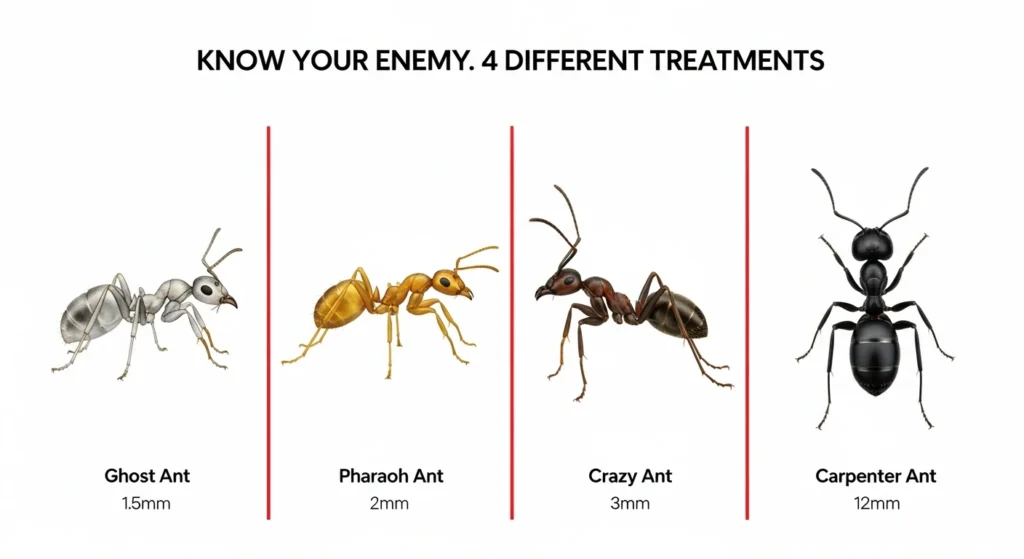
Not every ant responds to the same treatment. Identifying the species matters because it changes the approach entirely. Here are the four species StopPest technicians encounter most in Singapore HDB flats.
Ghost Ants (Tapinoma melanocephalum)
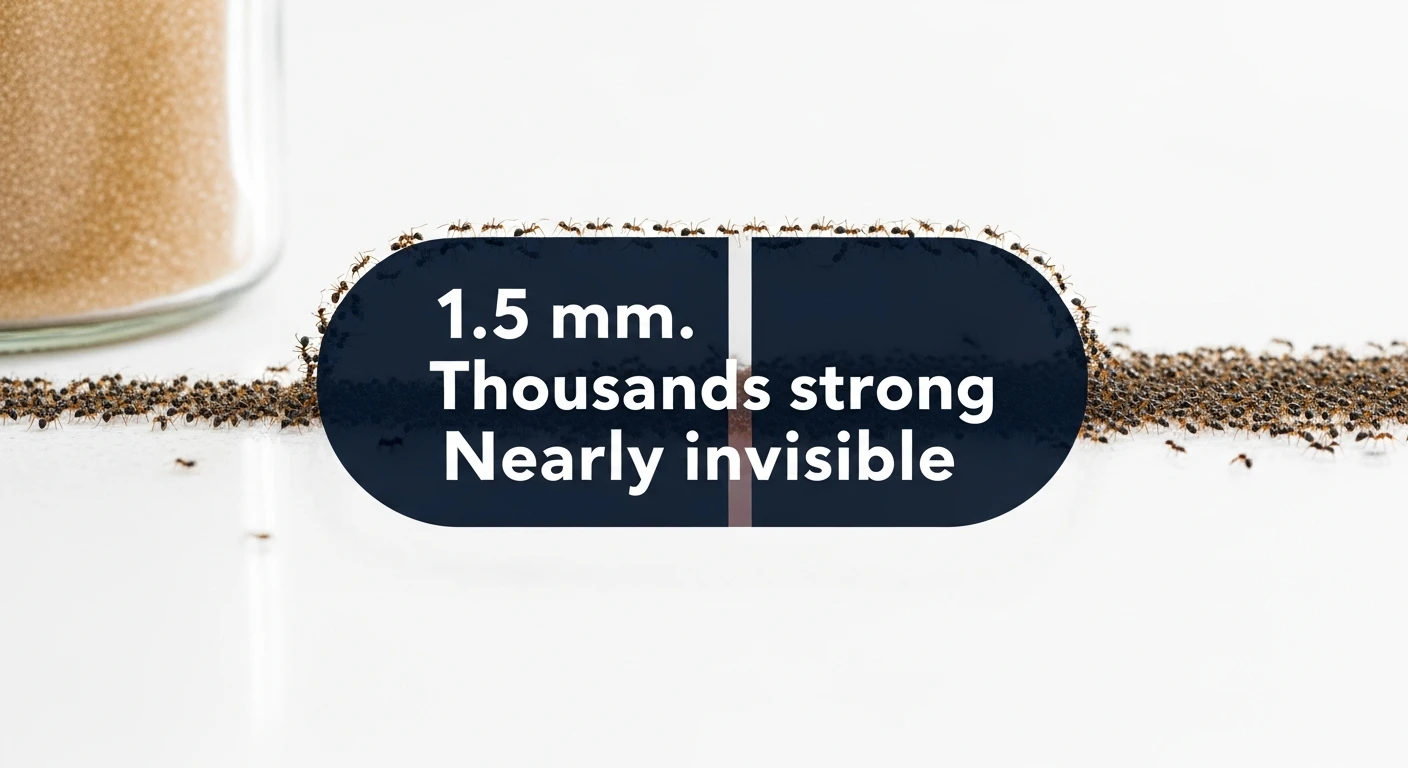
Ghost ants are the number one cause of ant infestations in Singapore homes. They measure about 1.3 to 1.5 mm with dark heads and near-transparent bodies, making them hard to spot until the trail is already long.
They need sugar and moisture to survive. That is why you find them near kitchen sinks, behind refrigerators, inside cabinets with food residue, and around bathroom fixtures. Ghost ants nest in tight spaces: wall voids, behind tiles, under countertop edges, and inside electrical outlets.
What makes them dangerous for HDB residents: ghost ant colonies frequently split into sub-colonies through a process called budding. One disturbance, like a spray, can trigger the colony to fragment. Instead of one nest, you now have three or four spread across different rooms.
Pharaoh Ants (Monomorium pharaonis)
Small, golden-yellow ants about 2 mm long. Pharaoh ants are a serious problem in HDB blocks because they travel through plumbing, wiring conduits, and shared wall cavities between units.
A pharaoh ant queen can live up to 12 years and a single colony can support multiple queens. They eat oily and protein-rich food, grease residue, and even toothpaste. They bite when disturbed.
Like ghost ants, pharaoh ants also bud. Spraying them is one of the worst things you can do. It scatters the colony deeper into the building structure, often into neighbouring units.
Crazy Ants (Paratrechina longicornis)
You will recognise these by their fast, erratic movement. Black or dark brown, 2 to 3 mm long, with unusually long legs and antennae. Crazy ants eat almost anything but prefer sweet foods.
They nest outdoors in soil, potted plants, and rubbish chute areas, but forage indoors. In HDB flats, they enter through window frames, door gaps, and pipe entry points. They do not sting but they infest in large numbers, making them a major nuisance.
Carpenter Ants (Camponotus spp.)
Less common but more destructive. Carpenter ants are the largest species you will find in HDB flats at 6 to 13 mm. They do not eat wood, but they excavate it to build nests. Damp wooden door frames, window sills, and cabinetry are prime targets.
If you see small piles of fine wood shavings near wooden fixtures, that is a sign of carpenter ant activity. Left unchecked, they weaken structural timber.
Where Ants Nest Inside HDB Flats
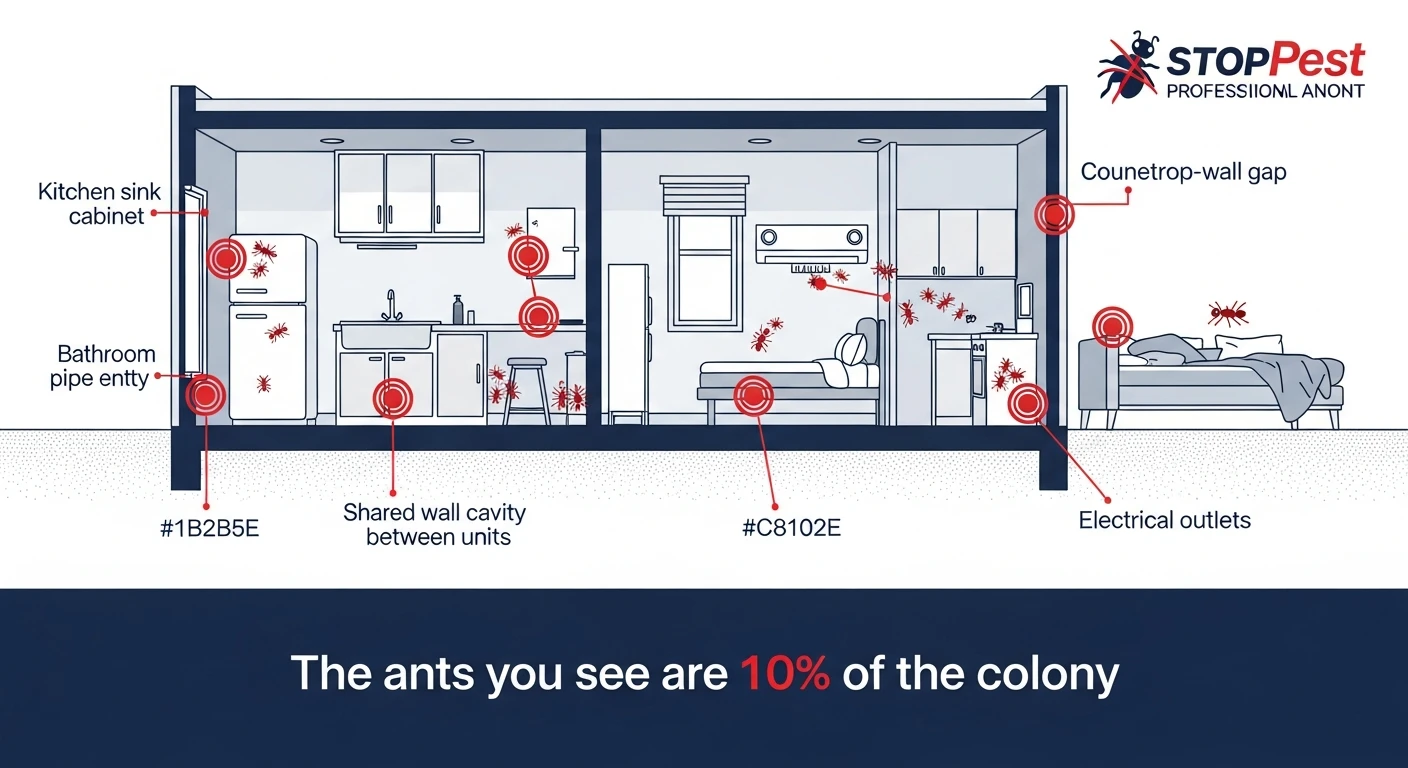
Ants do not just march across your countertop and leave. They set up permanent colonies inside your flat. Here are the most common nesting locations StopPest technicians find during inspections:
Kitchen: Behind the refrigerator, inside cabinet hinges, under the sink where plumbing enters the wall, inside electrical switch boxes, along the gap between countertop and wall.
Bathroom: Behind mirrors, inside vanity cabinets, around pipe entry points at floor level, behind toilet cisterns, under bathtub rims.
Living and bedrooms: Inside air-conditioning units (ants are attracted to condensation), within curtain rod brackets, behind power outlet face plates, inside door frame cavities.
Shared infrastructure: HDB flats share walls, plumbing risers, and electrical conduits with adjacent units. A colony nesting in the common wall cavity can forage into multiple flats on the same floor. This is why your ant problem may not actually originate from your unit.
Why DIY Ant Sprays Fail Every Time
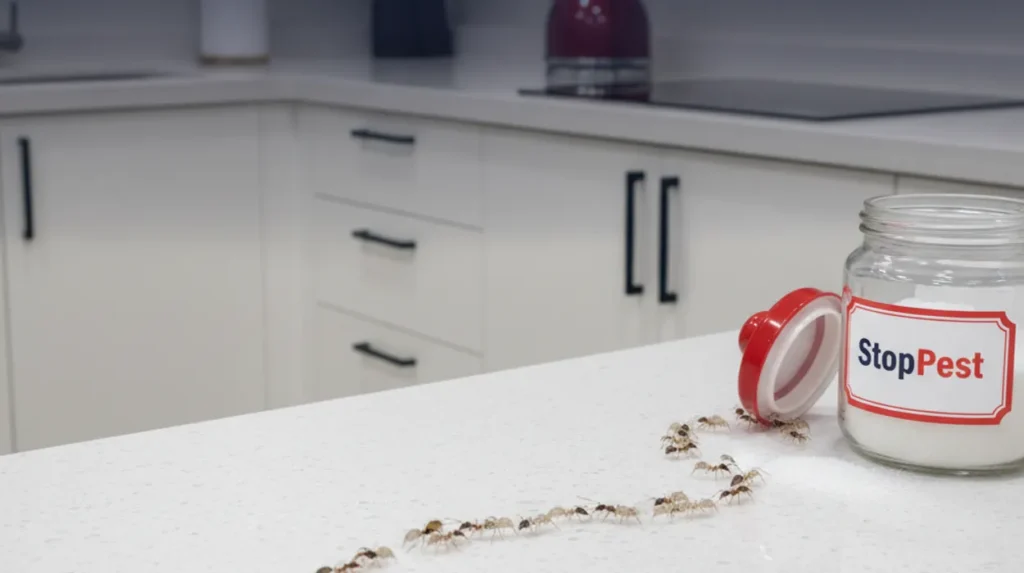
Most Singapore households reach for the same things: Baygon, vinegar spray, chalk barriers, or a can of insecticide from the hardware store. These might kill the ants you see. They will not solve the problem. Here is why.
Contact Kill Only Removes Workers
A typical ant colony in Singapore has thousands to hundreds of thousands of workers. The ants on your counter represent a small fraction of the colony. Spraying kills that fraction. The queen, safe inside the nest, replaces them within days.
Sprays Trigger Colony Budding
This is the critical point most people miss. When ants detect danger, certain species (ghost ants and pharaoh ants) split the colony. Queens and a group of workers break away to form a new nest in a different location. One spray can turn one colony into multiple colonies. You end up with a worse infestation than you started with.
Pheromone Alarms Reroute the Trail
Dead ants release alarm pheromones. The colony detects these chemicals and redirects foraging trails to avoid the treated area. The ants are not gone. They just moved to a different entry point.
Vinegar and Natural Repellents Are Temporary
Vinegar disrupts scent trails for a few hours. Once it evaporates, the ants return. Cinnamon, peppermint oil, and lemon juice work the same way. They are deterrents, not solutions. The colony remains active and will find another route.
Professional Ant Control: Baiting vs Barrier Treatment
Effective ant control in Singapore targets the colony, not the trail. Professional pest control companies use two primary methods.
Gel Baiting (Colony Elimination)
This is the gold standard for indoor ant control in HDB flats.
How it works: A slow-acting toxic gel is placed along ant trails and near entry points. Worker ants carry the bait back to the nest and feed it to larvae and the queen through a process called trophallaxis (mouth-to-mouth food transfer). Over 7 to 14 days, the poison spreads through the entire colony, including the queen.
Why it works: It uses the ants’ own behaviour against them. Instead of scattering the colony, it lets the workers do the distribution. No budding. No rerouting. The colony collapses from the inside.
Best for: Ghost ants, pharaoh ants, and other indoor-nesting species. This is the method StopPest recommends for most HDB ant infestations.
Residual Barrier Treatment (Perimeter Defence)
How it works: A residual insecticide is applied along external entry points: window frames, door thresholds, pipe entry points, and balcony edges. Ants that cross the treated zone pick up the chemical and carry it back to the colony.
Why it works: It creates a chemical boundary that remains active for weeks. Good for preventing re-entry from external sources, especially for crazy ants that nest outdoors.
Best for: Outdoor-nesting species foraging indoors. Often combined with gel baiting for full coverage.
What Professional Treatment Costs in Singapore
Professional ant control in Singapore typically ranges from S$80 to S$280 per visit, depending on the severity and unit size. Most infestations require 2 to 3 visits over a month to confirm colony elimination.
| Factor | Basic Treatment | Full Programme |
|---|---|---|
| Visits | 1 to 2 | 3 to 4 (monthly follow-up) |
| Method | Gel baiting | Gel baiting + barrier |
| Typical cost | S$80 to S$150 | S$150 to S$280 |
| Best for | Single-species, localised | Multi-species, whole flat |
Compare that to months of buying S$8 to S$15 cans of spray that keep the cycle going.
How to Prevent Ants from Coming Back
Even after professional treatment, prevention keeps the problem from returning.
Daily habits: Wipe kitchen surfaces after every meal. Do not leave pet food bowls out overnight. Rinse sugary containers before binning them. Empty kitchen bins daily, especially in humid months.
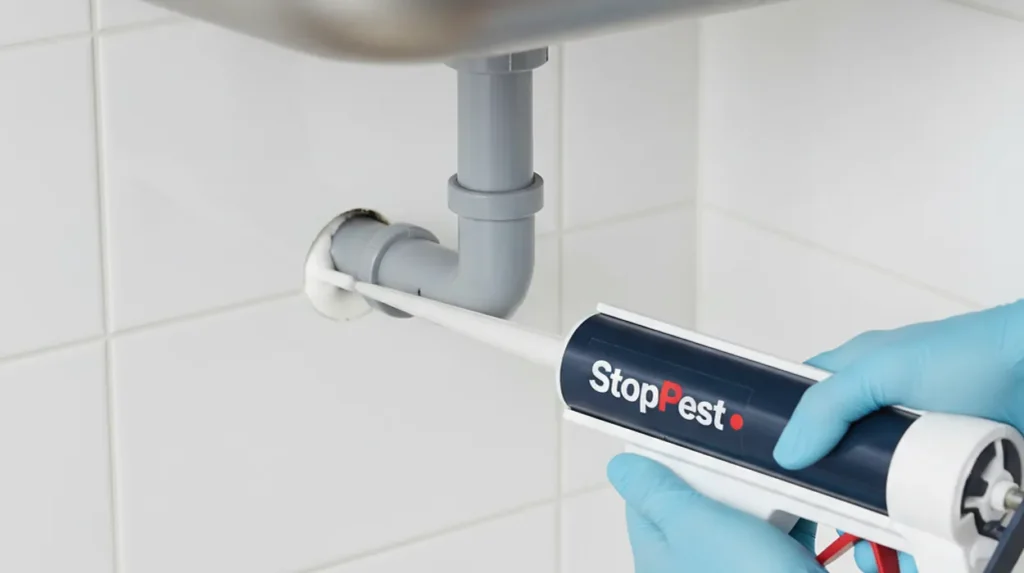
Seal entry points: Use silicone caulk to seal gaps around pipes, electrical outlets, and window frames. Pay attention to where the countertop meets the wall. These are the highways ants use.
Control moisture: Fix leaking taps and pipes. Dry bathroom floors after use. Ants need water as much as food. Remove the moisture and you remove half the attraction.
Talk to your neighbours: If your HDB neighbour also has ants, a single-unit treatment may not be enough. Colonies in shared wall cavities require coordinated treatment across units. StopPest can advise on multi-unit treatment plans.
When to Call a Professional
Call a pest control specialist if:
You see ant trails returning within 48 hours of cleaning. You spot ants in multiple rooms. You find winged ants indoors (this signals a mature colony producing reproductives). You see fine wood shavings near wooden fixtures. DIY baits have not worked after two weeks.
StopPest offers free inspections for HDB flats across Singapore. Our NEA-certified technicians identify the species, locate the nest, and apply targeted treatment that eliminates the colony, not just the trail.
Stop the cycle. Get a free quote from StopPest today.
Internal Links:
– StopPest Services
– StopPest Pricing
– Contact StopPest
External Links:
– NEA Licensed Pest Control Operators
– NParks Guide to Singapore Ant Species