
If you manage a property in Singapore, rats are no longer a deal with it later
issue. NEA has been publicly clear that premises managers and owners are expected to prevent rat friendly conditions, and enforcement has been tightened in recent years. (nea.gov.sg)
In our StopPest work across HDB estates, condos, cafés, warehouses, and bin centres, the pattern is consistent. Rats win when gaps stay open and food stays accessible. Singapore’s humidity and constant food availability make short term DIY barriers fail faster than people expect.
How to identify a rat infestation in your Singapore property?
[Answer Capsule] Look for fresh droppings, rub marks, gnaw marks, squeaking at night, and signs of harbourage like cluttered voids and storage corners. In Singapore, pay extra attention to ceiling voids, AC ledges, and refuse areas. If you see repeated signs for 48 hours, start proofing gaps and set controlled traps or call a professional. (nea.gov.sg)
The signs we treat as action now
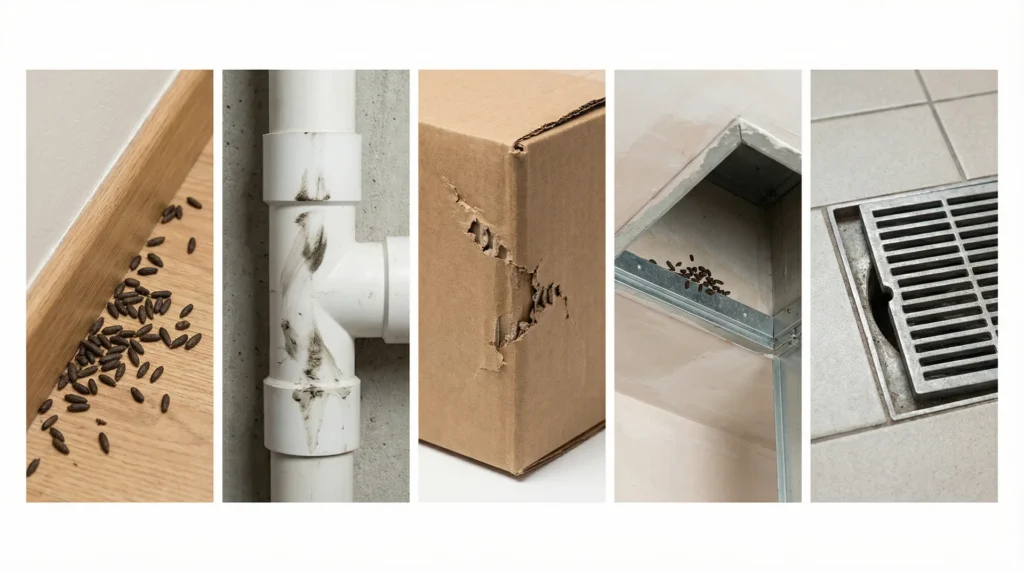
- Droppings near food storage, behind appliances, along walls.
- Rub marks and greasy smears on edges and pipes.
- Gnaw marks on wood, plastic, cable casing, and cartons.
- Scratching or squeaking from ceiling voids at night.
- Burrows in soil areas, planter beds, or near bin compounds. (nea.gov.sg)
Two minute rat check (home or business)
- Check behind fridge, chiller, and under sink.
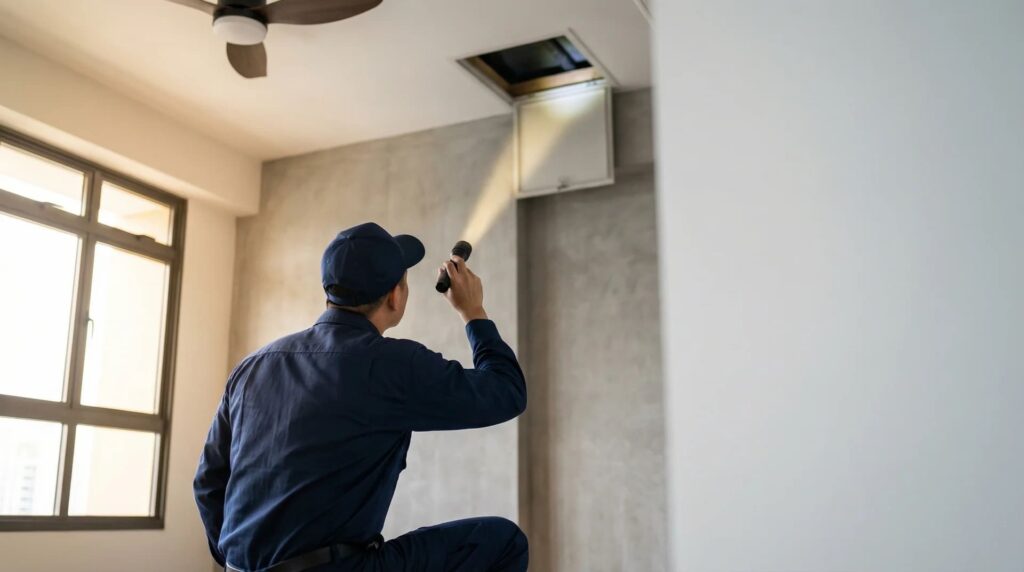
- Open the false ceiling access panel if you have one and look for droppings and runway marks.
- Check AC ledge trunking entries and conduit gaps.
- Inspect floor trap grating for looseness and side gaps.
- Check bin area for spilled food, torn liners, and gaps around doors.
What kinds of rats are common in Singapore and why it matters?
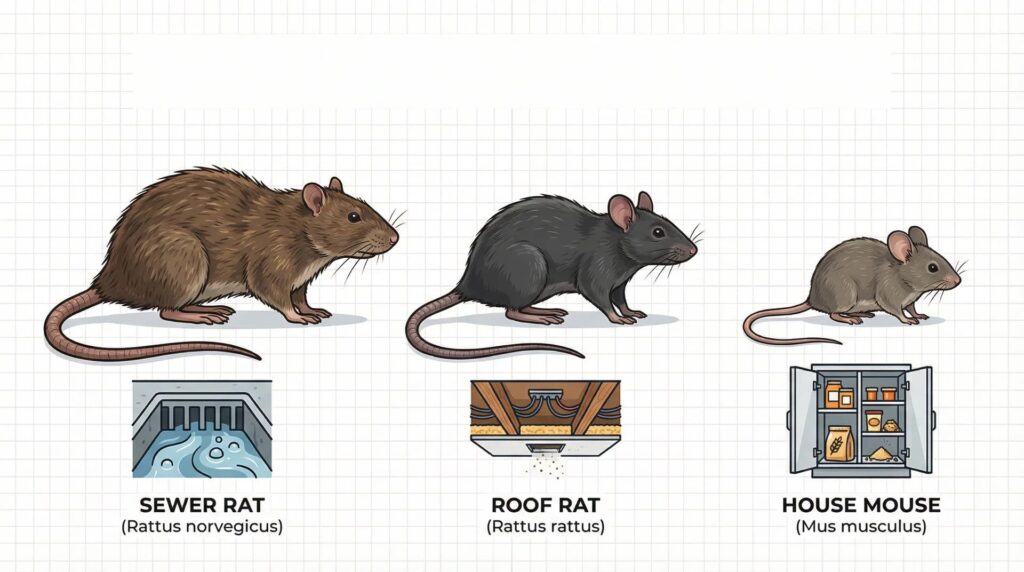
NEA notes three common rodent types the public often encounters: sewer rat (Rattus norvegicus), roof rat (Rattus rattus), and house mouse (Mus musculus). Their habits differ, so the fix differs. (nea.gov.sg)
Quick ID table we use during inspections
| What you see most | Likely culprit | Where we usually find activity in Singapore | What it changes in your plan |
|---|---|---|---|
| Low level activity, near drains and refuse | Sewer rat | Drains, bin centres, ground level storerooms | Proof ground gaps hard. Focus on refuse discipline. |
| Scratching in ceiling or high ledges | Roof rat | Ceiling voids, AC ledges, pipe routes | Proof ceiling penetrations. Trap along rat highwaysabove. |
| Small droppings, fast movement | House mouse | Internal cabinets, behind appliances | Seal tiny gaps. Increase internal monitoring. |
NEA also highlights that these rodents can have multiple pups per litter and short lifespans, which is why infestations can look sudden
even when the access point existed for months. (nea.gov.sg)
Why rats spread fast in Singapore
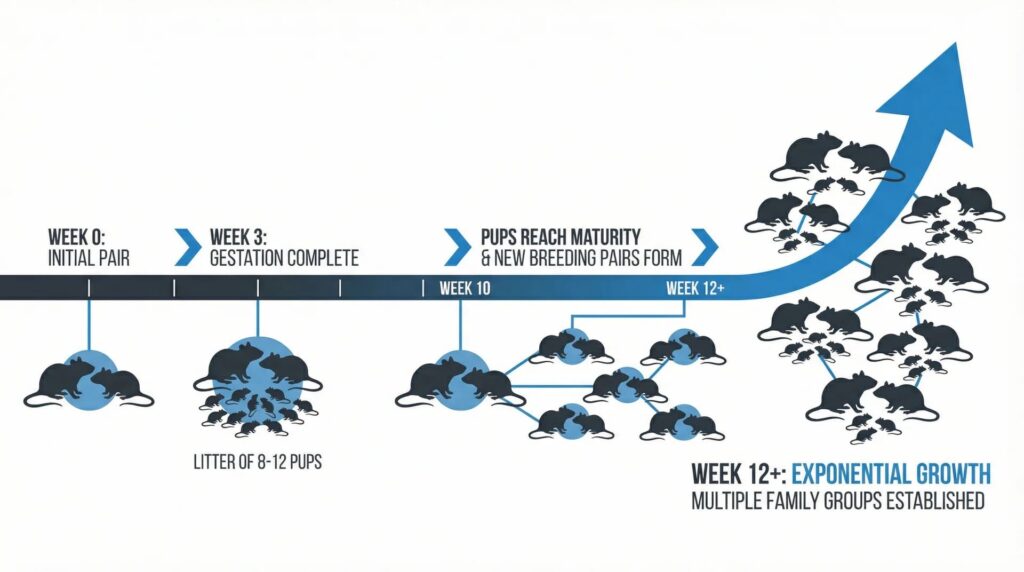
Rats reproduce quickly. Common references for rat life cycle note a gestation of about three weeks, sexual maturity in roughly 10 to 12 weeks, and multiple litters per year. (rentokil.com)
In Singapore, there is no seasonal slow period.
If food and harbourage are available, breeding can stay consistent year round.That is why we focus on two levers that stay effective in any month.
- Physical proofing that survives humidity and chewing
- Sanitation routines that remove easy calories daily
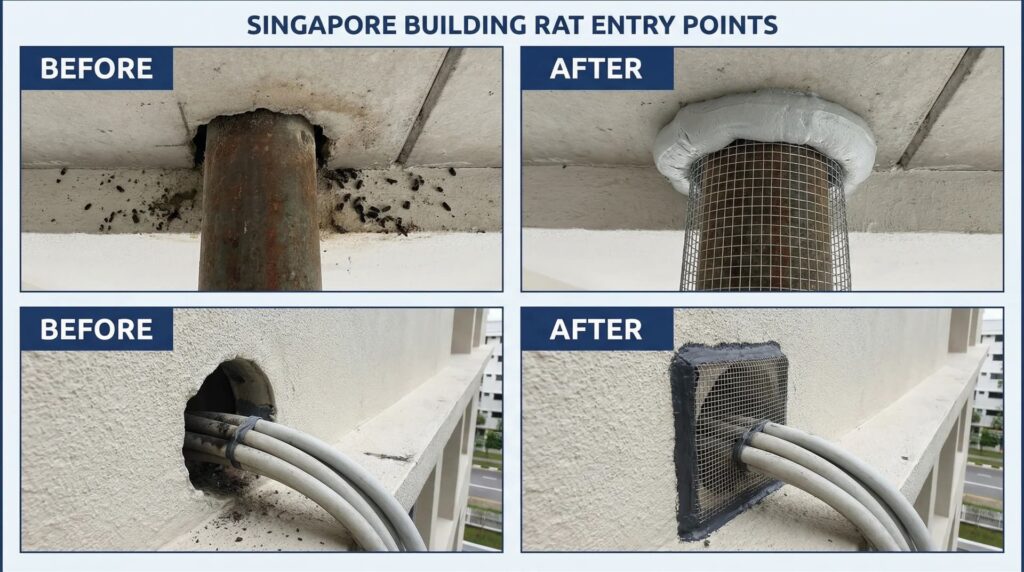
The 3 overlooked entry points we see most in Singapore and the fixes that hold
When clients say, We blocked the hole,
we usually find the rats are using a different route. These are the top three StopPest sees missed in real inspections.
| Overlooked entry point | Most reliable sealing fix | Material we prefer |
|---|---|---|
| Ceiling void gaps | Structural capping of pipe penetrations | Galvanized wire mesh plus expansion foam |
| AC ledge and conduit | Encasing trunking entries and sealing gaps | Stainless steel mesh plus weatherproof sealant |
| Floor trap grating | Retrofitting loose gratings with screw downs | Heavy duty stainless steel mesh plus cement patch |
Why these 3 matter in Singapore buildings
- Ceiling voids create hidden highways. Once the runway is established, you can trap rats for weeks and still see returns if penetrations stay open.
- AC ledges and trunking are common in condos and many commercial units. Gaps look
small,
but the route stays protected from people. - Floor traps are ignored because they
seem sealed.
Loose gratings and side gaps give repeated entry near wet areas.
Proofing rule we follow
If the fix is soft, peelable, or chewable, it is not proofing. It is temporary decor.
What attracts rats to Singapore homes, condos, and common areas
NEA’s public guidance is blunt. Rat control works best when you deny food, reduce harbourage, and maintain cleanliness and refuse management. (nea.gov.sg)
The common attractors we see in residential settings
- Food left out overnight including pet food bowls.
- Cardboard and clutter in storerooms and service yards. In humidity, these become nesting friendly quickly.
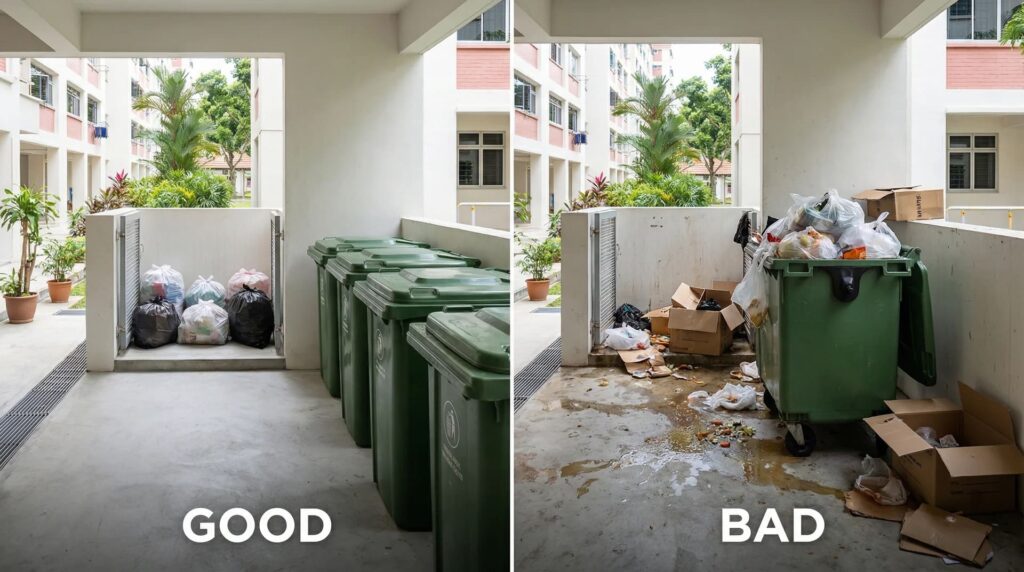
- Refuse areas with spills and loose bin lids, especially where multiple units share access.
- Planting corners and planter beds near bin compounds, which can hide burrows.
Immediate prevention checklist
- Store food in hard containers with tight lids.
- Clear cardboard stacks. Use sealed plastic storage instead.
- Rinse recyclables. Bag all food waste.
- Keep bin lids closed. Clean spills the same day.
- Reduce clutter in service yard and storeroom.
Rat control for F and B in Singapore: grease traps, back alley waste, and what SFA expects
For food premises, pest presence is treated seriously. SFA provides guidance specifically on preventing rat and cockroach infestations, and it points operators to strong housekeeping, refuse control, and prevention measures. (Default)
The two attractors we see most often
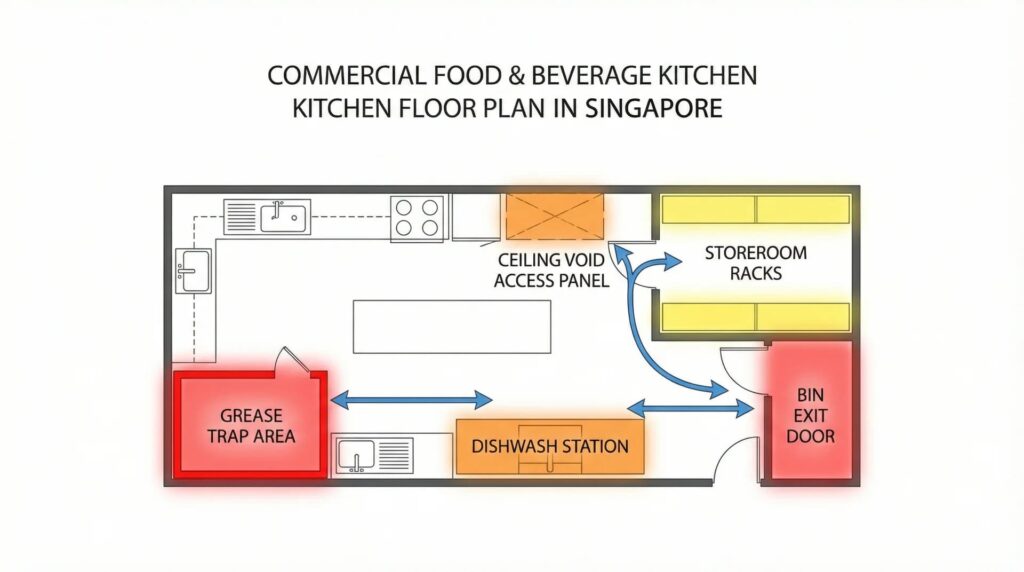
- Grease trap maintenance Accumulated sludge is a high protein food source. Poorly fitted lids create easy access points.
- Back alley waste Overflowing bins and unwashed bin liners pull rodents in from neighbouring units.
StopPest monthly IPM routine (what we actually do)
- Inspection frequency: Bi weekly hot zone checks covering kitchen, storeroom, and bin centre.
- Bait preferences: High palatability wax blocks in external stations. Non toxic monitoring baits or gel internally for sensitive areas.
- Proofing priority: Plug and patch any new gnaw marks or pipe gaps found during inspections.
Simple 4 week plan a manager can run
| Week | What to do | What you record |
|---|---|---|
| Week 1 | Full site inspection and set monitoring points | Map of hotspots and entry gaps |
| Week 2 | Proof priority gaps and adjust stations | Activity level by station and zone |
| Week 3 | Sanitation tune up for grease trap and bin flow | Waste issues and corrective actions |
| Week 4 | Review trend and lock in routines | Evidence of decline and remaining risks |
If you manage an F and B site and want a professional service reference, StopPest’s rodent service page is here: Rodent Control Singapore. (STOP PEST)
DIY rat control: what works, what backfires, and why
DIY often fails for one of two reasons.
- The
barrier
is chewable or fails in humidity. - Trapping is done without removing access, so the site keeps receiving new rats.
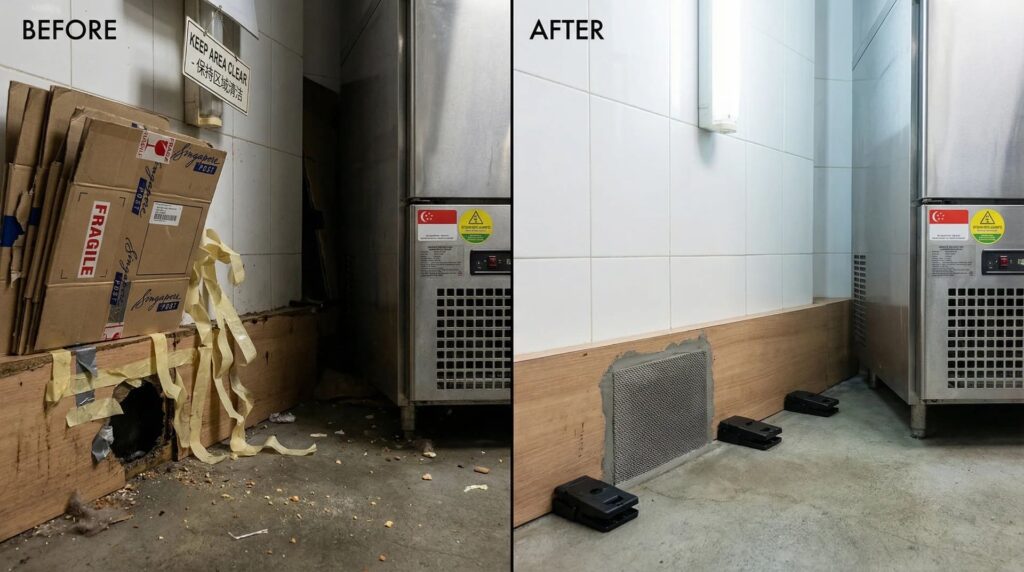
A real Singapore case: tape and cardboard made it worse
A small café owner tried blocking a hole behind a chiller using plastic tape and cardboard boxes.
Why it failed: In Singapore humidity, the tape lost adhesion. The cardboard became nesting material. The blockage also created a darker sheltered runway that hid movement, so the colony expanded unnoticed.
Our StopPest 48 hour turnaround
- First 24 hours: 12 snap traps and 6 tamper resistant bait stations. Thermal sweep to map the highway above the false ceiling.
- Next 24 hours: Sealed 4 primary structural gaps using stainless steel wool and rapid set mortar.
- Results: 5 rats captured within the first night. Zero activity within 5 days after two follow up visits.
The practical takeaway
If you only trap, you reduce symptoms. If you proof and clean while trapping, you remove the cause.
When should you call professional rat control in Singapore?
Call early if any of these are true.
- You hear activity in a ceiling void, especially above kitchens.
- Droppings return after 48 hours of cleaning.
- You manage an F and B site and need an auditable routine.
- There are children, seniors, or pets where bait handling must be controlled.
- You see repeated entry points you cannot properly cap or patch.
NEA’s core strategy aligns with what we do daily. Remove food access and harbourage. Keep the environment clean. Store food properly. Manage refuse properly. (nea.gov.sg)
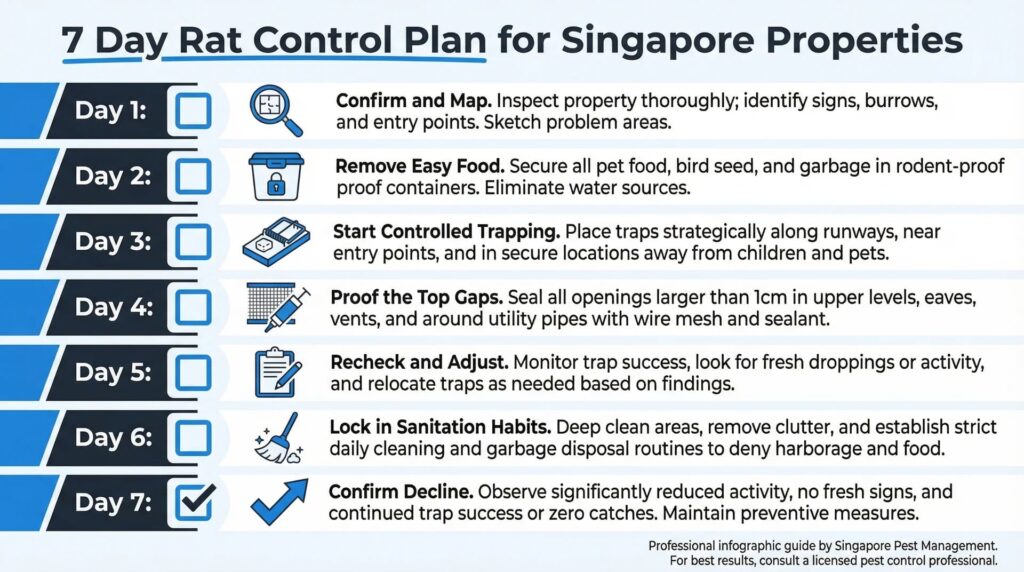
Actionable checklist: StopPest 7 day plan to cut rat activity fast
Day 1: Confirm and map
- Photograph droppings and gnaw marks.
- Identify likely routes along walls, pipes, and ceilings.
- Clear clutter behind appliances and in storerooms.
Day 2: Remove easy food
- Seal all food in hard containers.
- Bag waste tightly and clean bin area.
- Fix grease trap access issues.
Day 3: Start controlled trapping
- Place snap traps along wall edges where rub marks exist.
- Use tamper resistant stations only where safe and appropriate.
- Avoid random placement in open areas.
Day 4: Proof the top gaps
- Cap ceiling void penetrations.
- Seal AC ledge and conduit gaps with mesh and sealant.
- Retrofit loose floor trap gratings.
Day 5: Re check and adjust
- Remove captured rodents safely.
- Shift traps to active routes.
- Re inspect ceiling void and bin compound.
Day 6: Lock in sanitation habits
- Set daily bin cleaning rhythm.
- Reduce cardboard storage.
- Keep storeroom racks off the floor where possible.
Day 7: Confirm decline
- No new droppings. No new noises. No new gnaw marks.
- If signs remain, escalate to a professional programme.
FAQ: Rats in Singapore
Do rats only come from drains?
Not only. Drains matter, but roof rats often travel through ceiling voids, ledges, and conduit routes, especially in older buildings or units with many penetrations. (nea.gov.sg)
Is it enough to set traps if I keep seeing droppings?
Traps without proofing usually mean repeats. In our field work, the durable result comes when proofing and sanitation happen together while trapping reduces the current population.
What should an F and B manager prioritise first?
Fix the attractors that feed the site daily. Grease trap control and back alley waste discipline reduce calories first. Then proof access points and run a consistent inspection plan aligned to SFA guidance. (Default)
What are the most missed access points in Singapore units?
Ceiling void gaps, AC ledge trunking entries, and loose floor trap gratings. These are the ones we repeatedly see overlooked during first site visits.
Stop the Infestation Before the Fines Start
Summary: Don’t wait for an NEA inspection or a viral social media post to handle your rat problem.
Secure Your Property Today
- Fast Response: We implement a 48-hour turnaround to map highways and trap active rodents.
- Structural Proofing: We don’t just use tape and cardboard; we seal gaps with stainless steel mesh and mortar that rats can’t chew through.
- F&B Specialist: Custom IPM routines designed to keep your kitchen compliant with SFA standards.
Ready to eradicate rats for good? Book a StopPest Professional Inspection