
Renovation is often the first time a homeowner really looks at what is behind their walls. For most people, that is a relief. For some, it is the moment they find out their timber framework has been quietly eaten through for years. Termite inspection before renovation in Singapore is not standard practice, but it should be, because finding an active infestation mid-renovation is significantly more expensive and disruptive than finding it before a single wall has been hacked.
Quick Answer: Termite inspection before renovation in Singapore involves a licensed pest specialist checking all accessible timber, skirting, architraves, and subfloor areas for live termites, damage, and mud tubes before hacking begins. Inspections typically take 1-2 hours. Treating before renovation costs less, protects new finishes, and avoids delays that push back your contractor timeline.
Why Renovation Is the Worst Time to Discover Termites
When your contractor hacks a wall, they are exposing timber studs, door frames, ceiling joists, and flooring battens that may have been undisturbed for 10, 20, or 30 years. In Singapore’s humid climate, subterranean termites can establish large colonies inside wall cavities and under floors with no visible surface activity for a long time.
Once the walls come down and the structure is open, a termite infestation becomes impossible to ignore. Work stops. Your contractor is now waiting. You are calling a pest specialist on short notice. The colony may have spread across multiple areas, requiring more extensive treatment than a pre-renovation inspection would have caught.
There is also the matter of new materials. Treated timber is more resistant, but termites can still access it through soil contact, poor chemical barrier coverage, or gaps left during installation. If live termites are present during renovation, any new timber you bring into the space is at immediate risk.
What Happens When Termites Are Found Mid-Renovation
The short version: everything slows down and costs more.
Termite treatment mid-renovation is complicated. Some treatment methods, including soil treatment for landed homes, require access to ground-level soil or the underfloor area. If your contractor has already concreted over a section or installed new flooring, access is compromised and the treatment may need to be adapted, sometimes at extra cost.
The contractor cannot proceed with timber installation, wall closing, or finishing work until treatment is complete and the specialist has confirmed the area is clear. Treatment timelines depend on the method used, but a baiting program can take weeks. A chemical barrier treatment requires curing time before construction resumes.
Meanwhile, you are paying for delays, paying for storage if materials are on site, and potentially paying to extend your temporary living arrangements if you have already moved out.
What a Pre-Renovation Termite Inspection Involves
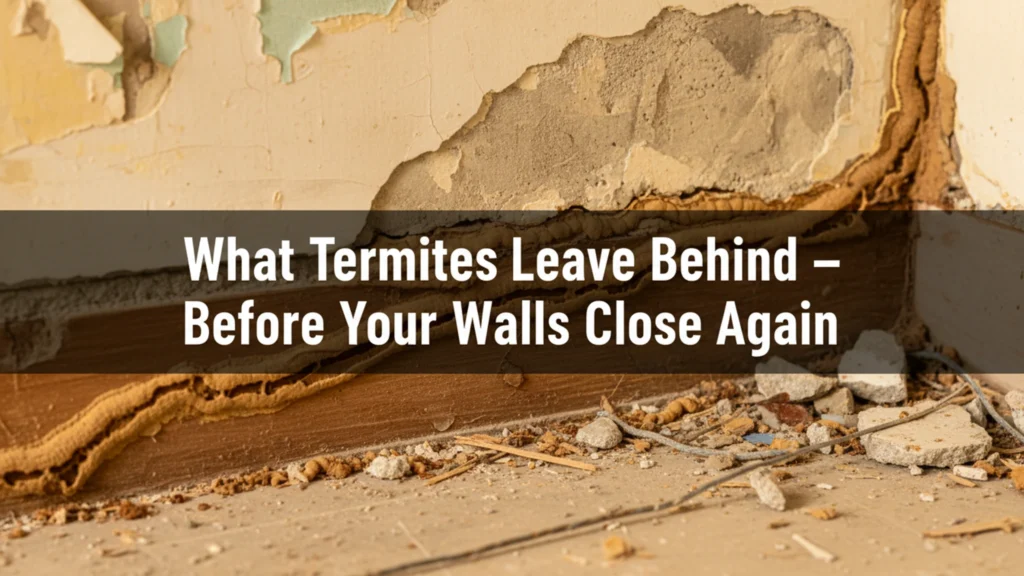
A pest specialist conducting a pre-renovation termite inspection will look at all accessible timber elements, including skirting boards, door frames, timber flooring, built-in cabinetry, ceiling boards, and roof void timbers where accessible. They will check for:
- Live termites and active mud tubes
- Hollowed or damaged timber (often identified by tapping and probing)
- Evidence of past activity and previous damage
- Conditions that make the property high risk, such as soil contact with timber, moisture damage, or proximity to landscaped areas
The inspection takes around one to two hours for a typical HDB flat or condominium unit. For landed properties, it takes longer given the additional areas to cover.
If activity is found, the specialist will recommend a treatment plan and give you a clear scope of work before renovation starts. You can factor this into your timeline and budget before signing off on the renovation contract.
What Your Contractor Checks vs What a Pest Specialist Finds
General contractors are trained to manage construction and renovation work. Most will notice obvious signs of severe termite damage, like completely hollow door frames or visibly compromised structural timber. They are not trained in pest identification, inspection methodology, or treatment.
A licensed pest specialist uses different tools: a moisture meter to detect damp areas that attract termites, a thermal camera in some cases to detect heat from active colonies inside walls, and a probe to test timber density. They know the entry points that termites use, the species common in Singapore, and what sub-surface activity looks like before it becomes surface-visible damage.
Flying termites in Singapore are a visible alarm, but by the time you see a swarm, the colony is already mature and has been active for several years. A specialist can identify a colony well before it reaches that stage.
Why Treating Before Hacking Is Cheaper Than Treating After
The maths are straightforward. A pre-renovation inspection typically costs SGD 80-150 for a flat. If treatment is needed, a standard chemical barrier or baiting program for an HDB unit runs in the hundreds, not thousands. You schedule it, complete it before your contractor starts, and proceed with a clean slate.
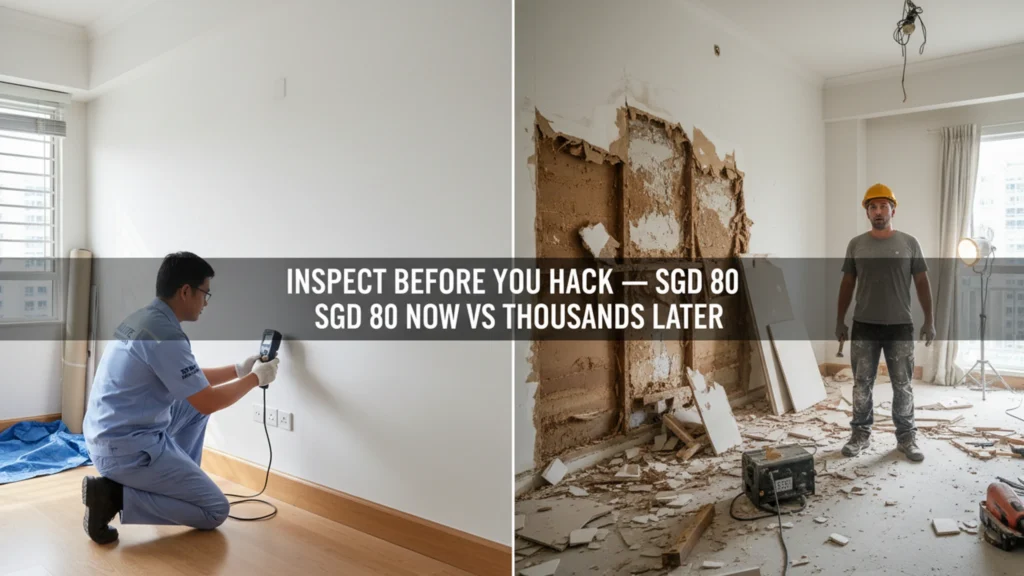
Mid-renovation treatment involves the same treatment cost, plus contractor idle time, plus the possibility of redoing work if treated areas need to be re-accessed. If new finishes have been applied over areas that still need treatment, some of that work may need to be undone.
Before any hacking, also check HDB’s renovation guidelines for what work requires approval and which contractors are on the HDB Direct Registration list. A compliant renovation starts with the right approvals, and a termite check fits naturally into the preparation phase before work begins.
If you are renovating a landed property, the stakes are higher. Subterranean termites can compromise structural timber at ground level and in the subfloor, and the cost of remediation after the fact is substantially higher than prevention. See our HDB pest control checklist for a practical pre-renovation preparation guide.
The bottom line: a pre-renovation termite inspection is a small, predictable cost that removes a large, unpredictable risk. It is one of the simplest things a homeowner can do before renovation starts.
Frequently Asked Questions
Q: Is a termite inspection before renovation mandatory in Singapore?
It is not legally required for HDB flats or condominiums. For landed properties, some developers and contractors recommend it, particularly if the property is older or near landscaped ground. Even where it is not mandatory, it is strongly advisable, because the consequences of finding an active infestation mid-renovation are significant in both cost and time.
Q: How long before renovation should I get the inspection done?
Book the inspection at least two to three weeks before your contractor’s start date. This gives time for results, treatment if needed, and treatment curing or monitoring before construction begins. For landed properties where soil treatment may be required, allow four to six weeks minimum.
Q: Can I do a DIY termite check before calling a specialist?
You can look for visible signs: mud tubes along skirting or walls, hollow-sounding timber when tapped, small piles of frass (termite droppings), or damaged wood grain. But DIY checks miss a lot. Termite activity inside wall cavities, under concrete, or in roof voids is not visible without the right tools and training. A specialist inspection gives you documented findings and a defensible starting point if issues arise during renovation.
Q: Do all pest control companies in Singapore offer pre-renovation inspections?
Not all companies specifically market this as a service, but most licensed pest control operators can conduct a pre-renovation inspection. Look for companies registered with the National Environment Agency (NEA) under the Environmental Public Health Act. Ask specifically for a pre-renovation or pre-construction termite inspection, not just a standard residential check.
Q: What if no termites are found? Is the inspection still worth it?
Yes. A clear inspection gives you confidence to proceed, and the report serves as a baseline. If termites appear after renovation, the pre-renovation inspection documents that the property was clear before work began, which is useful for warranty claims or disputes with contractors about the source of damage.